Car insurance is an essential part of owning a vehicle, and it’s required by law in most places. It provides financial protection in case of accidents, theft, or damage, ensuring you’re not left with huge out-of-pocket expenses.
One of the most important aspects of car insurance is the premium—the amount you pay for coverage. But what determines this amount? Understanding the factors that affect your car insurance premiums is crucial in helping you manage and potentially reduce your insurance costs.
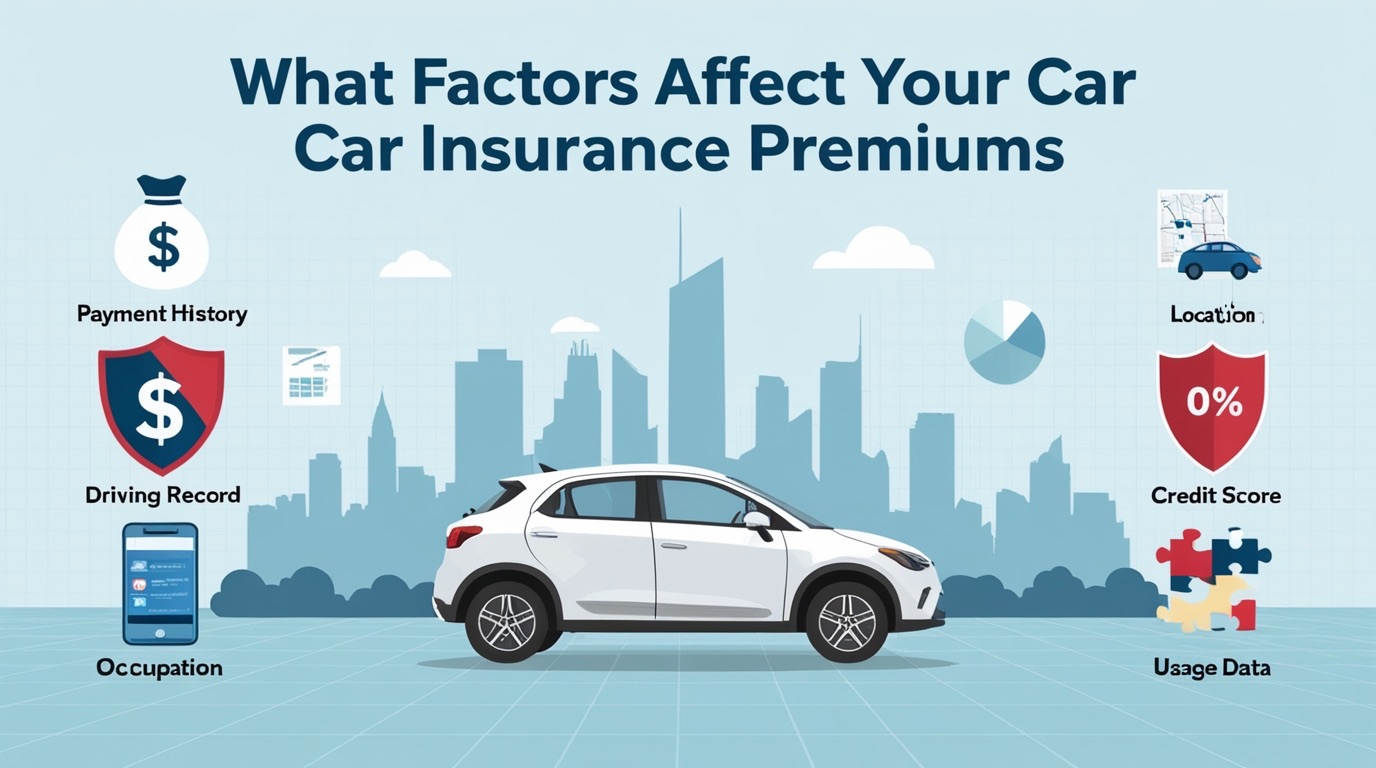
This guide covers what factors affect your car insurance premiums, allowing you to better understand what influences the cost of your car insurance policy.
Key Factors That Influence the Cost of Your Car Insurance
Insurance providers calculate premiums based on a wide range of factors. Some of these factors are within your control, while others are determined by external circumstances. By knowing these factors, you can make informed decisions that could potentially lower your premium costs.
Driving History and Experience
Your Driving Record
One of the most significant factors that affect your car insurance premiums is your driving record. Insurers closely examine your history of accidents, traffic violations, and previous claims. If you have a history of accidents or claims, your premiums will likely be higher because insurers consider you a higher risk. Traffic violations, like speeding tickets or reckless driving offenses, can also contribute to increased premiums.
On the other hand, a clean driving record with no accidents or claims will work in your favor and may help lower your premiums. Insurers often reward drivers with good records by offering lower rates, as they are seen as less likely to file a claim in the future.
Age and Experience
Your age and driving experience are also crucial in determining your premiums. Younger drivers, especially those under 25, typically face higher insurance premiums. This is because they are statistically more likely to be involved in accidents. Insurers view young drivers as higher risk, as they may not have the experience to handle dangerous situations on the road effectively.
As you gain more experience behind the wheel, your premiums are likely to decrease. However, premiums often start to rise again as drivers enter their senior years due to a higher likelihood of being involved in accidents.
Vehicle Type and Model
The Make and Model of Your Car
The type of vehicle you drive plays a significant role in your insurance premium. High-performance, luxury, and sports cars are often more expensive to insure. These cars tend to be more expensive to repair, more likely to be stolen, and can result in higher liability costs in case of an accident. Consequently, owning a high-end vehicle can increase your premiums.
Conversely, more common, economical cars typically have lower insurance rates because they are cheaper to repair and less prone to theft. Insurers also factor in the cost of replacing the vehicle if it’s totaled, which can significantly impact premiums.
Safety Features and Vehicle Age
The presence of safety features can reduce the cost of your premiums. Features such as anti-lock brakes, airbags, electronic stability control, and collision avoidance systems can make your car safer to drive. Insurers often offer discounts for cars equipped with advanced safety features because they reduce the likelihood of an accident or the severity of injuries.
Additionally, the age of your vehicle can affect premiums. Newer cars often come with the latest safety technology and may be cheaper to repair, leading to lower insurance rates. However, older cars may be more expensive to insure due to higher repair or replacement costs, especially if parts are difficult to find.
Location and Local Risk Factors
Where You Live
Your location plays a crucial role in determining your car insurance premiums. City dwellers often pay higher rates than those who live in rural areas. This is because urban areas typically have higher traffic density, increased risk of accidents, and higher rates of vehicle theft. In addition, the likelihood of being involved in an accident is generally higher in busy cities due to dense traffic.
Rural areas, on the other hand, tend to have less traffic, which reduces the likelihood of accidents. However, if you live in an area prone to natural disasters like floods, earthquakes, or hurricanes, your premiums may increase to account for the increased risk of damage.
ZIP Code and Regional Factors
Your specific ZIP code can significantly influence your insurance rates. Insurers analyze local crime rates, traffic patterns, and accident statistics to determine the level of risk in a given area. For example, areas with higher rates of accidents or car thefts typically see higher insurance premiums. Likewise, areas with a high frequency of natural disasters may lead to higher premiums due to the increased risk of damage.
Coverage Levels and Deductibles
Types of Coverage You Choose
The type of coverage you choose will also affect your premiums. Liability coverage, which covers the costs of injuries or damage you cause to others, is generally less expensive than comprehensive or collision coverage. Comprehensive coverage, which covers damage to your car from events such as theft or natural disasters, and collision coverage, which covers damage to your car in an accident, are more expensive.
If you opt for higher coverage limits, your premiums will increase. On the other hand, reducing your coverage limits to the minimum required by law can help lower your premiums. It’s essential to balance the cost of coverage with your needs and the value of your vehicle.
Choosing Your Deductible
Your deductible is the amount you pay out of pocket before your insurance coverage kicks in. A higher deductible generally results in lower premiums because you are assuming more of the financial responsibility in case of a claim. However, it’s important to choose a deductible you can afford, as a higher deductible means you will need to pay more in the event of an accident.
Credit Score and Financial Stability
How Credit Score Affects Premiums
Many insurance companies use your credit score to assess your premium. While this may seem unrelated to car insurance, studies have shown that individuals with poor credit are more likely to file claims. As a result, insurers may charge higher premiums to individuals with low credit scores.
Improving your credit score can potentially lower your premiums, as insurers may view you as less risky. It’s worth noting that some states prohibit insurers from using credit scores to determine premiums, so the impact varies depending on where you live.
Financial Responsibility and Payment History
Your payment history can also affect your premiums. Insurers prefer clients who have a history of paying their bills on time, as it reflects financial responsibility. Consistently paying your bills and maintaining good financial habits can help you secure lower insurance rates.
Gender and Marital Status
Gender Differences in Premiums
In general, men tend to pay higher car insurance premiums than women. This is largely because young men are statistically more likely to engage in risky driving behaviors, leading to higher accident rates. As a result, male drivers typically face higher premiums, particularly in their teenage and early 20s.
However, as drivers age and their risk decreases, the difference in premiums between men and women often narrows. Insurers may also use gender-based data to adjust premiums based on historical trends.
Marital Status and Premiums
Married drivers typically pay lower premiums than single drivers. Statistically, married drivers are less likely to be involved in accidents, which makes them a lower risk for insurers. As a result, many insurers offer discounts for married couples.
Discounts and Special Programs
Common Discounts to Lower Premiums
Insurance companies offer various discounts that can help lower your premiums. These may include safe driver discounts for maintaining a clean driving record, multi-policy discounts for bundling car insurance with other types of insurance, and discounts for driving fewer miles annually. Additionally, some insurers offer discounts for students with good grades or for members of certain organizations.
How to Qualify for Insurance Discounts
To qualify for discounts, you’ll need to meet specific criteria set by your insurer. Safe driving habits, installation of safety features, and having a clean claims history are common requirements. It’s important to review your policy regularly and ask your insurer about potential discounts you may qualify for.
Driving Habits and Mileage
How Your Daily Commute Affects Premiums
The distance you drive each day affects your car insurance premiums. Drivers who commute long distances or frequently drive for work are considered higher risk and may pay higher premiums due to the increased likelihood of being involved in an accident. On the other hand, drivers who use their vehicles sparingly may pay less for insurance.
Driving Behavior and Telematics Programs
Telematics programs, also known as usage-based insurance, track your driving behavior using a device installed in your car or through a smartphone app. These programs monitor factors like speed, braking, and acceleration. If you drive safely, you may be eligible for discounts on your premiums. Insurers reward good driving habits, which can help you save money.
Claims History and Insurance Provider
Past Claims and Premium Adjustments
Your claims history is another important factor that insurers use to calculate premiums. If you have a history of frequent claims, you may face higher premiums. Insurers view individuals with a high number of claims as more likely to file future claims, increasing their risk.
However, having a few claims doesn’t necessarily mean your premiums will skyrocket. The severity of the claims, how long ago they occurred, and your overall claims history are also considered.
Choosing the Right Insurance Provider
Different insurance providers assess risk in various ways, so it’s essential to shop around and compare premiums. Some insurers may offer discounts for certain factors, while others may have higher premiums for similar coverage. Take the time to research and find an insurer that offers the best rates for your specific situation.
Conclusion
The cost of your car insurance premium is determined by a variety of factors, ranging from your driving record and vehicle type to your location and claims history. While some factors are beyond your control, such as your age or where you live, there are several ways to manage and reduce your premiums over time. By improving your driving habits, maintaining a good credit score, and taking advantage of available discounts, you can lower the amount you pay for car insurance.
Regularly reviewing your policy and comparing rates from different insurers is essential to ensure you are getting the best deal.
FAQs
Does your car’s color affect your insurance premium?
No, the color of your car does not directly affect your insurance premium. Insurance companies base their premiums on factors such as vehicle make, model, and safety features, not on its color.
How can you lower your premiums if you have a poor driving record?
To lower your premiums, consider taking a defensive driving course, maintaining a clean record going forward, or increasing your deductible to reduce your overall premium.
Will your insurance premium go down if you add safety features to your car?
Yes, adding advanced safety features such as anti-lock brakes, airbags, or a tracking system can potentially lower your premiums, as insurers view these features as reducing the risk of accidents.
How does your location affect your car insurance rate?
Your location impacts your premium due to factors like traffic congestion, crime rates, and accident statistics. Cities with higher rates of accidents or theft typically have higher insurance premiums.
Can your credit score impact your car insurance rates?
Yes, insurers often use your credit score as a factor in determining your premiums. Those with lower credit scores may face higher rates, as they are considered higher risk.